
January 15, 2026

America's Grid is at a Crossroads  

Data Centers and Manufacturing Are Transforming Load Growth

The rapid expansion of data centers is reshaping energy demand nationwide:

  • The U.S. data center sector was valued at $208B in 2024 and is projected to reach $309B by 2030.
  • Energy consumption could hit 35 gigawatts by 2030, double 2022 levels.
  • Small data centers typically require 1–5 MW.
  • Hyperscale and AI-focused centers can require 20–100+ MW, supporting massive server counts.
  • Demand could rise 160% by 2030, driven largely by the rapid adoption of AI.

These trends are compounded by the resurgence of U.S. manufacturing. Companies expanding semiconductor fabrication, electric vehicle production, and other high-energy industries are increasingly facing constraints tied directly to grid capacity. 

For states focused on economic development, the message is clear: energy availability is becoming a top deciding factor in site selection. 

Weather Is the Leading Cause of Major Outages

Weather Is the Leading Cause of Major Outages

From 2000 to 2023, 80% of significant U.S. outages were caused by severe weather.

Different regions face distinct challenges: 

The 45th Parallel

States stretching from the Pacific Northwest to New England face: 

  • High winds that uproot poles
  • Heavy ice accumulation
  • Debris impacts
  • Repeated winter-season outages

These states also sit directly in the path of potential federal data center expansion—meaning stronger resilience planning is essential

The Southern U.S.

Coastal regions experience:

  • Flooded substations
  • Saltwater corrosion
  • Structure failures from hurricanes
  • Multi-million-customer outages

Recent hurricanes left between 2.4 and 5 million customers without power across the Southeast, highlighting growing vulnerability.

As extreme weather intensifies, the grid’s limitations become more pronounced.

Regional Grid Constraints Are Becoming Economic Barriers  

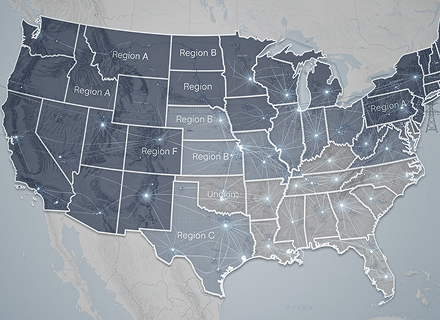
Many parts of the country—especially the Midwest, South, and Mid-Atlantic—are already struggling with capacity shortfalls. Several factors contribute:

Aging transmission infrastructure

Some regions may need 10 to nearly 15 TW-miles of additional transmission by 2035 to manage expected load growth.

Congestion between major regions

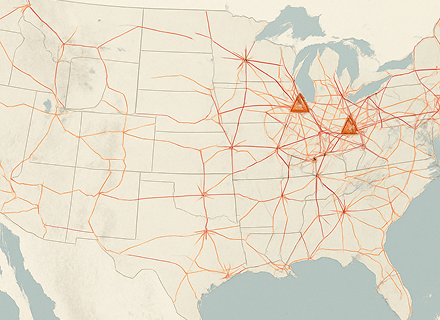
Bottlenecks between the Midwest, Plains, and Northeast continue to create reliability risks and raise energy costs.

Significant delays in transmission projects

Each $1 billion in delayed transmission investment can lead to $150–$370 million in lost business profits annually—plus higher consumer energy bills and reduced grid resilience.

Fragmentation across grid operators

The U.S. grid is divided into multiple ISOs and RTOs, each with its own governing structure. This makes coordination difficult during emergencies and complicates long-term planning. As states race to attract new industries, energy reliability is becoming a competitive advantage—with winners and losers emerging quickly.


Why Grid Hardening and Preventive Planning Matter More Than Ever 

Strengthening the grid is not just about responding to outages—it’s about preventing them.

Proactive Infrastructure Upgrades

Traditional wooden poles, exposed lines, and aging components often cannot withstand modern weather events. New materials, advanced structural designs, and strategic pole replacements reduce both outage frequency and restoration time.

Regular Inspection and Asset Management

Comprehensive pole inspections, vegetation management, and asset assessments significantly decrease failure rates. Improvements in these areas reduce the likelihood of cascading outages during storms.

Coordinated Regional Planning

Because utilities often operate in silos across ISO/RTO boundaries, cross-regional collaboration is essential. Weather patterns don't stop at state borders—and restoration efforts shouldn't either.

Grid Hardening Before Growth Hits

As demand from data centers and manufacturing surges, strengthening infrastructure before new load comes online prevents costly bottlenecks.

Funding Strategies That Prioritize Accountability

Federal programs—such as GRIP, TFP, and loan guarantees—are essential, but funding alone is not enough. Accountability measures, KPIs, and performance tracking ensure that investments deliver meaningful improvements in reliability and resilience.

In a world of sheep and wolves, we are the shepherds

The Path Forward: A More Reliable, Collaborative, and Future-Ready Grid  

The U.S. grid is being reshaped by forces more complex and interconnected than at any time in modern history. To meet the moment, utilities and policymakers must adopt a forward-looking approach that blends:

  • Proactive investment
  • Robust regional coordination
  • Modernized infrastructure
  • Stronger resilience measures
  • Streamlined permitting
  • Cross-sector collaboration

As load growth accelerates and weather events intensify, grid reliability will become a defining factor for economic competitiveness, public safety, and national security.

Organizations preparing now—whether utilities, manufacturers, energy developers, or government agencies—will be the ones best positioned for long-term success.

If you’d like help navigating resilience planning, grid modernization strategies, or energy risk analysis, our team is always here to support the path ahead. 

In a world of sheep and wolves, we are the shepherds